In July of 1969, in the midst of a memorable summer, (that season when reason took a vacation as the names of Woodstock and Chappaquiddick wormed their way into our history books), Uncle Sam flexed his strong arm and lifted a man higher than any man had been lifted before.
It was a holy moment. For Heaven’s sake, it was unlike anything we had witnessed before. We were moonstruck with wonder. What occurred was out of this world.
It was an intersection of time and space where JFK’s lofty dream (nearly forgotten following the nightmare in Dallas) was finally realized.
It was one small step for man, a giant leap for mankind.
Folding our hands, we knelt in grateful prayer amazed as Neil unfolded a flag and raised it on a pole before proceeding to moonwalk on a cratered surface we’d previously seen only through a telescope.
Meanwhile, back on planet earth we listened to a ten-year-old Michael Jackson singing on the radio. As we sang along with “I’ll Be There,” we realized the boy-wonder had provided us appropriate lyrics. We imagined ourselves being there. One day dancing on that crescent moon, kicking up dust and looking back at that big blue marble suspended in an even bigger black sky.
It’s hard to believe it’s been forty years since Apollo 11 rocketed through space depositing one who left footprints on the moon.
Even now, all those many years later, it’s just as hard to believe as I look at that crescent-shaped light overhead that members of the human race actually visited that far-off place.
But what’s even more difficult to comprehend is why the Creator of the cosmos visited our third rate planet in a second rate galaxy a couple thousand years ago.
He didn’t plant a flag, but He unfurled a banner on which He announced His unconditional love to an estranged world of aimless humans.
It was a flesh-and-blood banner (spread eagle over wooden beams) that became a launching pad triggering the maiden voyage of grace from the outer realms of eternity to the far reaches of the planet we call home.
And while angels watched, Love’s eagle landed. And onto the sun-baked soil of Palestine, wine-colored liquid flowed from the lifeless body of one stapled to an old bloodied cross.
That gathering pool is what accounts for the reddish footprints still visible to those with eyes of faith to see.
The day Love’s eagle landed, a holy God took a step toward His sinful creation. With open-arms and a welcoming smile He spoke words of pardon anticipated for millennia.
“All is forgiven!”
That’s one small step for God, a giant leap for mankind!
That love fest for Michael was quite the phenom with tributes and music that went on and on.
A song from Mariah. A Magic review. Both Smokey and Usher gave heart-shards some glue.
A poem from Maya. A sermon by Al. And words from Mike’s brothers and his little gal.
I loved hearing “Soon” by the Crouch Gospel Choir. And that wee lad from England? His voice sure inspired!
But what really moved me were Pastor Smith’s words that some probably countered as wrong or absurd.
He said, “Even Michael, the beloved King of Pop, must bow to King Jesus now that his life has stopped.”
No matter our color, our status or fame, when death comes to claim us there’s only one name
we all will acknowledge as Lord and as King. And it’s not Mohammad or Buddha or Ming.
Yes, billions heard Lucius declare what is true. But will they serve Jesus before death? Will you?
* based on Philippians 2: 9-11
9Therefore God exalted him to the highest place and gave him the name that is above every name, 10that at the name of Jesus every knee should bow, in heaven and on earth and under the earth, 11and every tongue confess that Jesus Christ is Lord, to the glory of God the Father.
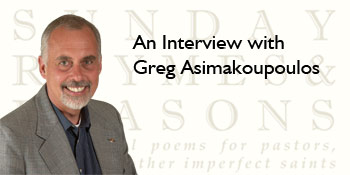
Greg talks about his book, Sunday Rhymes & Reasons
Interviewer: Mark D. Johnson, Founder of the Partial Observer
Greg, you’ve been writing poetry for the Partial Observer for several years now. What is it about poetry that makes it an effective vehicle for your thoughts on current events as opposed to writing an opinion column in prose?
Most everyone who comments (or blogs) on politics, religion and popular culture does so through prose. On the enneagram personality indicator, I’m a #4. We creative types like to approach life unlike most. I enjoy being different. Besides, I enjoy the challenge of conveying my opinions, insights and conclusions in poetic form. Forcing thoughts through the filter of meter and rhyme requires additional effort and time. All the same, when I’m done I have a sense of satisfaction.I think poetry lends itself to suggesting an application of the news and not simply announcing the news. If it is a memorable string of words that suggest “so what,” you are more apt to share it with a friend verbally or forward it on the internet.
Walk us through your creative process as you sit down to write a poem on a particular topic.
I watch the Today Show every morning as I sip my first cup of coffee. I watch CNN before I go to bed at night. I also have a news alert software on my iPhone. I am constantly aware of what the major news stories of the day are. From day to day as I digest the headlines, I evaluate the importance of each. The weekly deadline for my column at http://www.partialobserver.com is Thursday 9pm Pacific Time. That means by Tuesday or Wednesday (at the latest) I have to decide what news items, sports event or national holiday I will tackle. When I began writing Rhymes and Reasons five years ago, I only wrote one poem a week. Now it is typical for me to deal with two major topics each Friday. That is especially true if it is a busy news week. Once I’ve decided what story I am going to comment on, I doodle on a yellow pad with a pencil. I always look for puns, plays on words and ways to come at the topic from the side door. I never know how a poem will end once I start it. It’s an adventure in creativity and going with my thoughts. I probably write two or three different drafts before I settle on the version that appears on Friday. While that pattern is the norm, it is not unusual for me to get an idea and have the finished poem in 15 minutes. Over the years I have experimented with different rhyming motifs. One of my favorites is a style I think I invented. The first two lines rhyme and then the third and fourth lines simply tag along in an established meter but do not rhyme.
I’m often amazed at how quickly you write a polished poem so soon after a major news event. Do the words flow more easily than usual at such times? What kind of topics are the most difficult to write about?
I guess I’m a news junkie. I LOVE following what’s going on in the nation and the world. That may stem from my first job as a news announcer for a local radio station at the age of 17. Ever since I have had a nose for news. I wrote my first poem when I was in second grade. I’ve been writing poetry ever since. I write several poems a week. But I must add a disclaimer. My poetry is more like that doggerel of Odgen Nash or Edgar Guest than the abstract non-rhyming verse prized by academia. Because of the frequency with which I attempt to play with words and string them together in rhyming arrangements, words flow quick quickly when I sit down to tackle a topic. I almost think in iambic pentameter (ten syllables to a line).The most difficult part of writing Rhymes and Reasons is settling on what to write about. Tragedies in the news are also tough to reduce to a few stanzas. More often than not my poetical commentaries on tragic current events are free-verse poetry. Somehow a predictable meter and rhyme seem disrespectful to those who are in mourning.
As you think back over the news events of the past several years that you’ve been writing Rhymes & Reasons, is there anything that strikes you in terms of the direction our nation has gone in that time, perhaps culturally or politically? Or are there any trends that you’ve observed. How have we changed since, say, September 11, 2001?
In my opinion we have become much more media conscious than anything. Immediately following 911 we had a God-consciousness that was unmistakable. Recognizing our vulnerability as a nation (and as individuals), we gathered in chapels, churches and cathedrals for spontaneous prayer gatherings. But that spiritual revival was short-lived. Once the immediate threat of the terrorists had subsided, we returned to our self-confidence as a people. What was different was our dependence on the 24 hour news channels to keep us informed. We watched with rapt attention as the Twin Towers collapsed on September 11th and from that day on we have become unhealthily dependant upon television news to shape our understanding of the world.
This volume has a decidedly religious theme. What are you hoping readers will take away from this collection?
Faith means everything to me. Although I genuinely have fun commenting on popular culture and current events, my faith-verses flow out of my heart to heal the hurting. It is my hope that my God-centered poems will encourage the downtrodden, depressed, and doubting as well as those who have an awareness of the Creator’s presence and power in the world. Sunday Rhymes and Reasons is my attempt to combine poetry I believe God has given me into one accessible volume. A volume that will be read and re-read year after year.
The Bible, of course, has a great deal of poetry in it. Why did Biblical authors write in verse so frequently?
I don’t know that I am qualified to answer that question. I can only speculate. Job, Psalms, Proverbs, Song of Solomon and Ecclesiastes contain some of the best poetry in all of literature. Then, like now, people grasped truth through imagery, metaphors and word pictures. Showing someone the truth is always more effective than telling someone what they need to know. I believe that is why Jesus told parables as often as he did. While parables are not poetry as such, they are part of the same extended family. If you go back and read the first couple chapters of Genesis, you find yourself staring at a unique canvas on which the Creator painted a scene that escapes the linear logic of science.
You recently wrote about your youngest daughter graduating from high school. Do you feel like your life has entered a new stage as an ’empty nester’? In what ways can major life changes affect our view of the world?
My wife and I have definitely entered a new season of life. For twenty-six out of the twenty-seven years Wendy and I have been married, our lives have orbited around our children. Now we finally have the time to invest our lives in each other. The reality of “empty-nest” parenthood opens your eyes to the pain and the joy that millions have already experienced and others soon will. As my friend Gary Walter, the president of The Evangelical Covenant Church, likes to say, “The more you know, the more you see.” In other words, the more we experience of this world, the more we can feel and know the nuances and emotions of life. We become sensitive to what we have previously been oblivious to. So, I guess I am saying that the more I really taste of life, I become more capable as a poet. Major life changes add additional paints to the palette and more width to the canvas.
I see that you have dedicated the book to your deceased father. Tell us about him.
My dad died just after midnight on November 4, 2008, a red-letter date in our nation’s history. The day Americans elected a black man to live in the White House, my eighty-two year-old father’s citizenship in Heaven was certified. That was not the first time his personal history overlapped with American history. On September 2, 1945 my dad, a nineteen year-old Corporal in the U.S. Marine Corp, stood twenty feet behind General Douglas Mac Arthur aboard the Battleship Missouri as the treaty ending World War 2 was signed in Tokyo Bay. He spoke about that unique experience often with much pride. My dad loved his country. He taught me patriotism. But he also taught me the importance of faith. As a small church pastor, he became my inspiration to enter the ministry. He often would use poetry to illustrate his sermons. I guess that rubbed off on me as I grew up sitting on the first pew. He took pride in the poems I wrote. His fourteen-year battle with prostate cancer inspired many verses contained in Sunday Rhymes and Reasons. Since he died while I was compiling poems for this volume, it only seemed right that I dedicate it to him.
NOTE: The Partial Observer website, well-loved and utilized for nearly 20 years, and with many contributors over the years, has been retired, as of 10/21/2021. Greg’s column there, which contained 1,032 entries, are being migrated to this new blogsite of Greg’s, where he continues with his weekly poetic posts. The PO poems have been marked with the category of “Partial Observer.”
Greg’s book, ‘Sunday Rhymes & Reasons‘ is still available – see theBOOKS menu.
Pondering the passing of two celebrities; Jon and Kate Plus Hate, Slaves of Lust; A Sidekick in the Spotlight
Remembering an Angel and the King Pondering the passing of two celebrities
Farrah’s dead and Michael, too. The news is shocking, sad but true. The King of Pop and Ryan’s hope are gone before their time.
But lest I think “Who gives a care?” I’d best remember I’ll be there. What’s bad will someday steal what’s good. There’s no way to beat it.
So we’d do well to plan ahead before our friends find out we’re dead. Let’s make amends with those we’ve wronged and make our peace with God.
Jon and Kate Plus Hate The sad saga of a once big happy family
Jon and Kate plus eight means more than one full house. To parent eight small active kids might tempt you to get soused.
Jon and Kate plus weight that TV stars must bear make for a burden that will stoop the strongest anywhere.
Jon and Kate plus hate means vows once made won’t last. Without forgiveness for misdeeds, the dye of breakup’s cast.
Jon and Kate plus faith could mend what’s blown apart, but only if they both submit to Him who rules their hearts.
Jon and Kate, I hate the fact that you two aren’t now one. Your eight deserve both dad and mom. Please reverse what you’ve done.
Slaves of Lust An over-populated political prison
The missing governor’s been found much to his wife’s dismay. He was in South America a rollin’ in the hay.
He is the latest slave of lust whose zipper can’t stay closed. Adulterous leadership abounds. The list just grows and grows.
So what’s with all these cheating men in whom we’ve placed our trust? Why can’t they focus on their job instead of some gal’s bust?
A Sidekick in the Spotlight Remembering Ed McMahon
The sidekick’s in the spotlight now. He finally got his due. The world’s saluting Ed McMahon now that his life is through.
“He-e-e-r-r-r-r-e-e-e?s Johnny!” Ed was known to drone in New York and LA. But that gig ended long ago when Carson passed away.
Ed found his niche as number two. “Behind the scenes? That’s fine!” A shadow-dweller just off-stage. But that was where he shined.
And since we love the limelight lots, we’ve much to learn from Ed. Don’t grab the glory like a star. Deny yourself instead.
* This poem is based on Philippians 2:3-4 “Do nothing out of selfish ambition or vain conceit, but in humility consider others better than yourselves. Each of you should look not only to your own interests, but also to the interests of others.”
 My Rhymes and Reasons