Have you ever considered who the wisemen left behind?
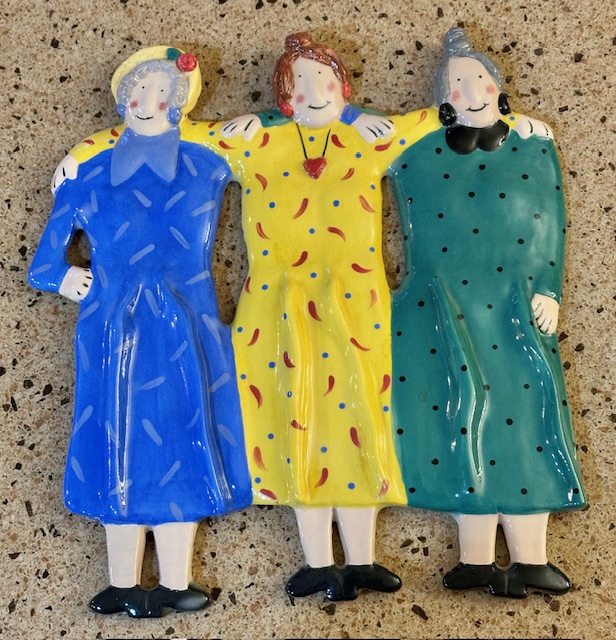
There were three mates who stayed behind to run the home the kids to mind while Baltashazar, Melchior and Caspar headed west.
The wisemen’s wives were smart as well. Their men away, they’d buy and sell. For months on end they ruled like queens because their kings were gone.
They had no clue what their men found in Bethlehem on holy ground. God-with-us was now with them who worshipped Him with gifts.
And when they made their way back home, the magi met their wives alone and shared with them a mystery… how God became a man.
In addition to each week’s post on this website, Greg Asimakoupoulos offers daily video devotionals on his YouTube channel. Here is a sample video. If you are interested in receiving these devotionals Monday through Friday, you can subscribe on Greg’s channel.
The Biblical story of the Flight into Egypt revisited in terms of current events
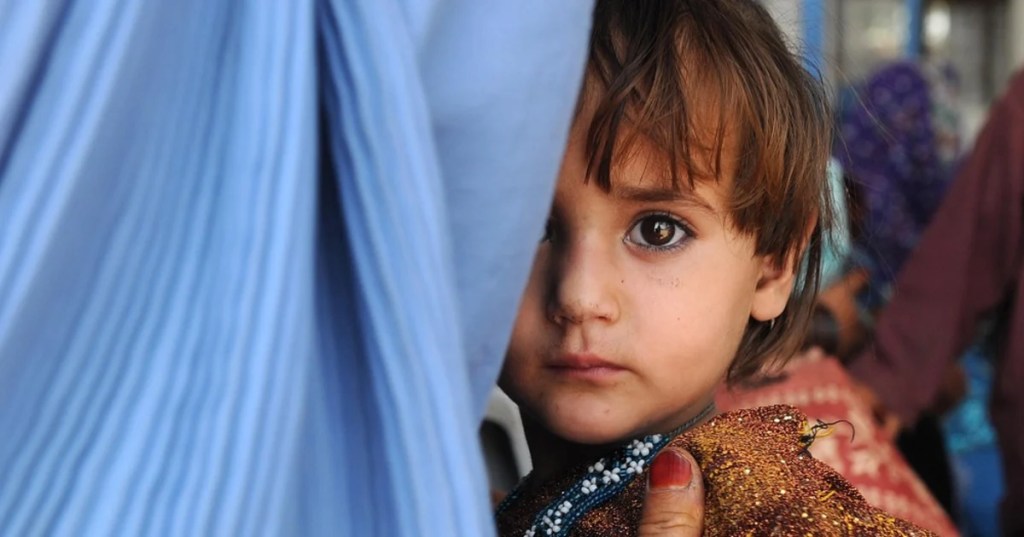
Against the backdrop of bloodshed and the unconscionable violence in Palestine, a refugee couple with a newborn baby follow the dictates of those in charge to move south. And so they do.
From the Gaza Strip they escape across the border to Egypt. From the land promised to Abraham’s children in ancient time, they move to a country historically associated with brutal bondage and cruelty.
This flight into Egypt is like the exodus in reverse. Running from sure death with their infant son’s future at stake, this weary frightened twosome trudge toward an unknown destination with their infant son in tow.
This flight would prove to be anything but smooth. Turbulence (in the form of terror) would take its toll. From the little town of Bethlehem in the West Bank of Israel to the sunbaked banks of the Nile in Egypt, the young family of three fled sure death.
Trusting only in the God they worship, they abandoned the security they’ve known and embraced a hope they could not see. May their experience be repeated over and over again by those who flee tyrannical tyrants in search of survival.
The innkeeper in our nativity set bears a striking resemblance to me
For those Christians who follow the liturgical church year, Christmas is not just a day but a season. It’s a season that continues for a dozen days until Epiphany (January 6th). That concept is illustrated in the popular holiday song “The Twelve Days of Christmas.”
As a result, our family leaves our decorations up when many Christmas trees and wreaths are deposited curbside. Our tree remains lit. Alexa continues to play the carols and our Fontanini nativity figures remain in position at the entrance to our family room.
In our nativity scene, we have the innkeeper and his family next to the holy family in the stable. And this neighboring family bears a striking resemblance to our family. There is a husband and wife and three daughters. Like me, the innkeeper figure is mostly bald. Through the years we’ve even added a son-in-law and grandchildren.
Truth be told, the account of Christ’s nativity in the Gospel of Luke does not actually make reference to an innkeeper. But it does refer to the fact that Mary’s baby was born in a barn because there was “no room in the inn.” So, it’s fair to infer that there likely was someone who, recognizing their plight, directed Joseph and Mary to the only available shelter on his property.
The other day as I took time to ponder these plastic figures and the story they represent, I had a new insight. The person who offered the stable to the expectant couple was actually practicing a principle that the newborn baby would one day teach as an adult rabbi. In Matthew 25 Jesus acknowledges that when we care for individuals in need (the homeless, the hungry, the sick and the imprisoned) we are showing love for Him. In essence He said, “When you serve the least of these, you are serving me.”
Even before Jesus was born, the innkeeper was serving Him by serving the homeless refugee teenager who was carrying Him. He was figuratively (and literally) doing what Jesus would later call all His followers to do. And he’s not the only “innkeeper” to serve God by serving others.
This Christmas season I am thinking of a modern-day innkeeper who began a life-changing organization one hundred years ago this year. His name was Abraham Vereide. He was a Methodist pastor in Seattle who came from Norway as an immigrant in the early 1900s. Touched by the plight of the poor and disadvantaged in his adopted city, Pastor Vereide sought out local business leaders to find a tangible way to influence their community for good. And so, Goodwill Industries was begun in 1923. With $475 and a dream, Pastor Vereide rallied a group of Seattle businessmen to help provide employment, education and economic opportunities for those struggling to get by.
From the start, Seattle Goodwill collected used clothing and furnishings and hired individuals to repair and sell recycled items. Their initial motto was “Not charity but a chance.” Giving those who struggle a chance and giving used items a chance for a second life remains their mission a century later.
As an immigrant, Pastor Vereide understood the challenges of the refugee. And from the very beginning of this humanitarian organization, Seattle Goodwill has attempted to bridge the gap created by unemployment, discrimination and racial prejudice. Like the Bethlehem innkeeper, Vereide made sure those who worked with him looked out for others for Christ’s sake.
The rest of Pastor Vereide’s life was punctuated by a similar concern for others. During the economic downturn of the 1930s, he regularly met with Seattle’s mayor Arthur Langley and other city leaders. When Langley was elected Governor, he asked Pator Vereide to convene the first ever Governor’s Prayer Breakfast.
Eventually word of what was happening in the Evergreen State reached the White House. President Eisenhower called on the founder of Seattle Goodwill to created goodwill among lawmakers in Washington D.C. And, thus, the Presidential Prayer Breakfast Movement was born. Seventy years later this amazing phenomenon, that finds lawmakers from across the aisle meeting for Bible study and prayer, continues. And, oh by the way, I know about Pastor Vereide because he was the minister who performed my Norwegian grandparents’ wedding in 1921.
On the eve of Epiphany there are a multitude of sounds to consider
On this twelfth day of Christmas, I’m listening for the percussive rhythm of twelve drummers drumming. But I don’t hear it.
I don’t even hear the familiar melody of that traditional song that calls attention to (among other things) five golden rings, three French hens and a partridge in a pear tree.
Perhaps I’m barking up the wrong tree. It’s entirely possible. The recent “blizzard of the century” that blanketed upstate New York in an unprecedented snowfall unleashed the sounds of sirens from emergency vehicles helping the despairing and searching for the missing.
Rather than twelve drummers, what’s drumming in my head are the snares of holiday travel that kept families separated from one another this season.
I’m aware of the sighs and tears that punctate the pain and grief of those facing this new year without a loved one who left through the doorway of death in recent days.
I’m hearing the cacophony of chaotic concerns related to the recent upticks in COVID variants.
I’m listening to the constant (and as-yet unanswered) prayers for peace in Ukraine while those in Ukraine hear the scream of rockets overhead and the scream of victims on the ground.
My ears embrace the sounds of suffering from terminally-ill kids in cancer wards in children’s hospitals as well as the muffled weeping of countless women who regret their decision to abort their unborn baby.
I can’t help but hearing the sounds of praying parents and grandparents calling out to God on behalf of those they love who are making self-destructive choices or suffering the consequences of mindless decisions made in haste.
And on this day before Epiphany, when we will at long last celebrate the magi’s arrival at their longed-for destination, I also hear an infant’s cry.
It is a cry that echoes down the hallway of two millennia. It is the cry of empathy and understanding. God-with-us is with us, indeed.


 My Rhymes and Reasons