Forsaken by God

A Good Friday meditation originally published in the Pentecostal Evangel in April 1990

Deserted. Forgotten.
Stood up. Let down.

“Forsaken, my God, by You. Why?”

A piercing cry from swollen lips
by one hung out to die.

“My God, my God, why have you forsaken me?”

A shepherd king first complained these words while
being hunted,
being sure that God was on his side,
being sure he’d been anointed.
But confused and disappointed,
he hung his head.
He closed his eyes and prayed.

Drained of strength (too pained to sleep)
he smelled the scent of death. (His own).
He heard the sounds of enemies approaching:
the scoffing jeers,
the searing jokes of sneering folks.

The wounds of words were indistinguishable from
the agony of betrayal:
Betrayed by friends.
Betrayed by loyal subjects.
Betrayed by God?
Where was this God in whom the king had trusted?

“My God, my God, why have you forsaken me?”

This time the same cry is heard beneath a Roman cross.
Not from a shepherd who would be king,
but from a King who called Himself a Shepherd.

A Worker of wood.
A Worker of good.
A Worker of words.
A Worker of wonders.
A Worker who wonders,
“Where’s the One with Whom I’m one?”
Somehow, some way
the questioning cry of King David seemed appropriate
from his Son a thousand years thereafter.

A Man of Sorrows
acquainted with grief,
acquainted with alienation,
rejected by an innkeeper,
maligned by His own brothers,
misunderstood by “the righteous,”
forgotten by the five thousand miraculously fed,
framed by the fickle crowd
whose palms lay withered…dead.

In addition,
He was betrayed by one He had helped.
He was deserted by another who promised,
“Though all others flee, I always will stand true.”

Like David of old.
Like you and me.
He knew rejection’s pain.

But God forsaken?
Surely not!
Not One who came from heaven.
Not One who claimed God’s name.

All the same,
hear the words ascribed to Him
by those who heard Him speak.

“My God, my God, why have you forsaken me?”

Of all the pain inflicted…
the crown,
the whip,
the nails,
the loneliness of friendship failed,
the ridicule from those for whom He came.

Yet of all the pain inflicted,
the worst was when for one brief moment
God the Father turned away from His suffering Son
(agonizing for His Son)
He watched and wept for a while.

But a holy God could not allow Himself to gave upon
the cross,
the loss of innocence,
the sin of all people
of all places
of all time past, present and future
placed upon His perfect Son.

As in the day of David,
the crowd looked on
to watch and wag their heads.
But not the Father
who closed His eyes and turned His back
and heard His begotten pray…

“My God, my God, why have you forsaken me?”

Yet forsaken not forever.
Amid the rumble of the thunder
and the darkness of the day,
the Son was heard to whisper words
which offered hope before He passed away…

“Father, into Your hands I commit my Spirit.”

He knew that God was there
strangely satisfied with what He’d seen
(and what He couldn’t see)
all present and accounted for.

The forsaken Son
(forsaken no longer)
with confidence looked up
and reached out
to you and me.

That lonely separation
(albeit all so brief
yet altogether all sufficient)
means that we never have to voice that ancient question

“My God, my God, why have you forsaken me?”
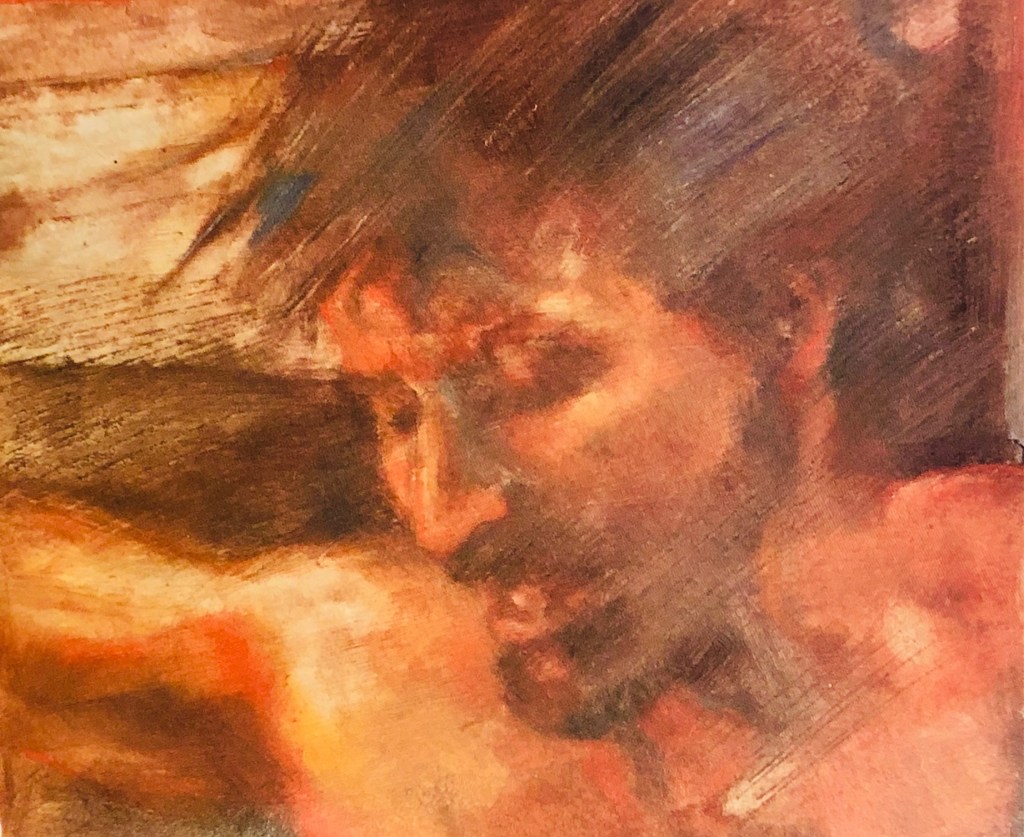
It’s a God Friday

Reflections on Good Friday

Today is God’s Friday!
Hardly good!

A dying man.
A cross of wood.
A jeering crowd.
A grieving mom.

A son eclipsed from view.
A holy Father shuts His eyes.
Two thieves emit their dying sighs.
Eleven grieving friends look on
in disbelief and fear.

But on this dark and dismal day
we hear the suffering Savior say
“Tetelestai (your debt is paid).
Redeemed, you’ve been set free.”

God’s Friday is indeed quite good.
A thoughtful glance beneath the hood
reveals the engine of our hope.
Atonement. Peace with God.

The Power of the Cross

Poetic reflections on this Good Friday;
In Praise of Easter

The Power of the CrossPoetic reflections on this Good Friday I’ve sung There’s Power in the Blood,”
since I was just a boy.
“Would you be free from your burden of sin?”
the gospel songwriter asked.
“There is power, power, wonder-working power
in the precious blood of the Lamb,”
 he contends.
“The life is in the blood, the Scriptures say.
So, there’s power in the blood.”

But is there power in the cross?
A scaffold symbolizing loss?
That’s what it is you know.

Loss of innocence.  
The cross was Caesar’s preferred way of punishing criminals.
Those nailed to the hardwood crossbeams
were hardened criminals.
Guilty as guilty can be.
Death row inmates.
Punishment-worthy with a capital P.
Green milers undeserving a purple heart.
Only the worst were candidates
to quench society’s blood thirsty desire.

Loss of dignity.The cross displayed an unclothed victim
in the most immodest pose possible.
Prior to being hoisted as society’s debt
(reminding the crucified and onlookers alike
that crime doesn’t pay),
they was paraded like circus animals.
Humiliated by the laughter.
Peppered by the jeers.
Flogged to within an inch of their lives
before the main attraction would
leave them ready for a yard of bones
six feet beneath the blood-soaked soil.

Loss of pride.
Those crucified were robbed of whatever self-worth
they’d held on to since they stole their first breath at birth.
Suspended between heaven and earth,
writhing in pain, these objects of shame
had no reason to be proud
for crying out loud.
And that’s exactly what they did.
Screaming’s more like it.
Agony.
No ecstasy, except for the sick onlookers
for whom human torture
provided a demented sense of pleasure.

Loss of life.
Those who hung from a cross
didn’t hang around long.
Not breathing, anyway.
The cross was the final curtain.
There was no intermission.
The executioner’s mission was clear.
In this one-at play,
he knew his script by heart.
He had his lines down cold.
“Break a leg!” the prompter would call from off-stage.
An expression to encourage
the executor in his performance.
It was also a suggestion for hastening the death
of the victim on the unvarnished stake.

So, power in the cross?
Are you kidding?
The cross on which the victim cowered in pain
and convulsed uncontrollably had no power.
Could this wood be anything but a three-dimensional stage
on which the drama of justice was enacted?
It was but an inanimate object.

“Oh, I object,” a convert cries.
“That crossbeam on which Jesus died,
has fueled my faith and moved my heart.
There’s power in His cross.”

Ah yes.It is the bridge that lets us cross
a chasm far too great to span.
It is the power that achieved
God’s vast eternal plan.”

The cross achieves what nothing could,
for in that intersecting wood
what once was dead is born again
as One once living dies.

There’s power in Christ’s precious blood
and in His cross as well.
For on that bloodstained wooden stake
our souls are saved from Hell.

In Praise of Easter
The ultimate grave robber

Graveyards are a fact of life.
Just ask my father’s widowed wife.
Those granite tombstones punctuate
a lawn that’s hard to mow.

Such markers call to mind the pain
of waging war (with Death) in vain.
The landscape littered with gray stones
is lifeless, cold and dark.

But there’s an empty grave I’m told
that’s far away and very old.
A not-so-final resting place
whose vacancy inspires.

Within the earth they laid my Christ
drained of the blood that paid my price.
But mourning proved quite premature
as night gave way to day.

That empty cave’s a mystery
that fills my heart with ecstasy.
This is the bedrock of our faith
that robs Sleep of its sting.

Good Friday Now and Then

Looking at the past through the lens of the present

The calendar above my desk
announces that today is a good Friday.

But the headlines of my morning paper
counter that claim.
A river of crimson blood
flows through the parched dirt streets
of an ancient city.

It’s a pity really.
Innocent life snuffed out.
Victimized by fanatic fundamentalists.
Warring factions who fashion a wardrobe of power
cloaking the city in a sinister fog.

“Bag dad and bury him,”
a jaded widow doubled in grief
chides her frightened children.
“Hurry please, before your father is disposed
upon some garbage heap.”

This mother’s mourning
continues late into the night.

“I rock my babies to sleep
wishing them sweet dreams
all the while praying my own will come true.
Dreams that my sons and daughters will be able
to grow up without being blown up
never to wake again.”

The complaint of the ancient psalmist is voiced anew.
“Where is God anyway?”
“Why has He forsaken the helpless anyhow?”

The mother of Jesus knew a similar sorrow.
Hunched at the foot of a Roman cross,
Mary inched back in fear and revulsion.
Her swollen eyes looked through
tear-stained fingers at a lifeless body.
It was a body she knew only too well.

This dead man was once the baby
she had gently rocked to sleep.
This bloody corpse had once been the toddler
whose bloodied knees she had tenderly bandaged.
This object of her grief had (not so long ago)
been her twelve-year-old Bar Mitzvah boy.
You know.
The one who went missing for three days
only to eventually to be found in the Temple
talking with the elders.

And now that life
(which God had supernaturally given her)
was gone.

As she lived her own nightmare that day,
I doubt Mary dared to dream
she would again find her Son in three days time.

The injustice was just too blinding.
The pain too intense.
The reasons why the blood was flowing
not nearly clear enough.

Two women (separated by two millennia)
drank bitter dregs from a common cup.
One lost an Iraqi husband.
The other a Jewish son.
For neither was it a good Friday.
It was a bad news day all the way.

And in the midst of human agony
the likes of which few of us could possibly imagine,
God has a way of showing up unannounced and unexpected.

It’s called Easter.

The Bar Mitzvah boy did it again!