Remembering Diana and Teresa twenty-five years after their deaths
The mother of William and Harry and the mother of Calcutta’s poor were taken too early with much left to do in a world stained by bloodshed and war.
Both these mothers gave birth to a vision that remains unfulfilled to this day. It’s a vision of kindness and mercy where peace and contentment can play.
It’s a vision that invites us to focus on what is (as yet) still unseen. And so every morning, let’s look high and low to find ways to fulfill what they dreamed.
Editor’s note: Princess Diana was tragically killed in a car crash on August 31, 1997. Mother Teresa died later that same week on September 5, 1997, just ten days after her 87th birthday. The following poem was written shortly after Teresa’s death and republished in 2017.
Hollywood actress Virginia Patton Moss had a wonderful life
Yes, Virginia, there is…
A solitary somber bell ringing in Bedford Falls.
A host of fans who grieve your passing.
A wonderful life waiting beyond this one.
A reunion with loved ones who’ve gone before.
An audience with the One whose sinless life, undeserved death and unexpected resurrection make it all possible!
Good grief! You’ve had a great life!
Peace to your memory! Comfort to our hearts!
Virginia Ann Marie Patton Moss (June 25, 1925 – August 18, 2022) was an American businesswoman and actress. After appearing in several films in the early 1940s, she was cast in her most well-known role as Ruth Dakin Bailey in Frank Capra‘s It’s a Wonderful Life (1946). In 1949, Patton retired from acting, with her final film credit being The Lucky Stiff (1949).
While a student at USC, Patton began to audition for acting parts. She collaborated in plays with screenwriter William C. DeMille while in college.[6] She had several insignificant film appearances before being cast in Capra’s It’s a Wonderful Life (1946) as Ruth Dakin Bailey, the wife of George Bailey’s younger brother Harry. Although Capra did not know Patton personally, she read the role for him and he signed her to a contract. Patton later said that she was the only girl the famous director ever signed in his entire career. Patton still gave interviews about It’s a Wonderful Life and was the last surviving credited member of the adult actors in the film (a number of child actors are still alive).
Patton made only four films after It’s a Wonderful Life, including her first lead in the B-Western Black Eagle (1948).[7] She appeared in the drama The Burning Cross (1946), a film about a World War II veteran who becomes embroiled with the Ku Klux Klan upon returning to his hometown.
Patton was married to Cruse W. Moss from 1949 until his death in 2018. She gave up acting in the late 1940s to concentrate on raising a family with her husband in Ann Arbor, Michigan.[7] She later attended the University of Michigan.
Virginia’s husband Cruse began his career with Kaiser-Jeep Corporation ultimately serving as President of the Automotive Division. Jeep developed the first SUV – The Wagoneer under his leadership. When American Motors acquired Kaiser Jeep in 1970, Mr. Moss formed AM General Corporation and served as its first President. AM General became the world’s largest manufacturer of tactical wheeled vehicles with factories worldwide. He subsequently joined White Motor Corporation, a Fortune 500 company and a leading worldwide manufacturer of heavy-duty commercial trucks, farm equipment and materials handling equipment as President and Chief Executive Officer and later became Chairman of the Board. Mr. Moss left White Motor Corporation in 1985, after the sale of White to Volvo, to devote full-time to the growth and development of General Automotive Corporation, which he founded. He retired from General Automotive Corporation in 1996.
Greg’s book, “Finding God in It’s a Wonderful Life“ is listed on the BOOKS menu at $5.88-$14.99 Lulu Books.
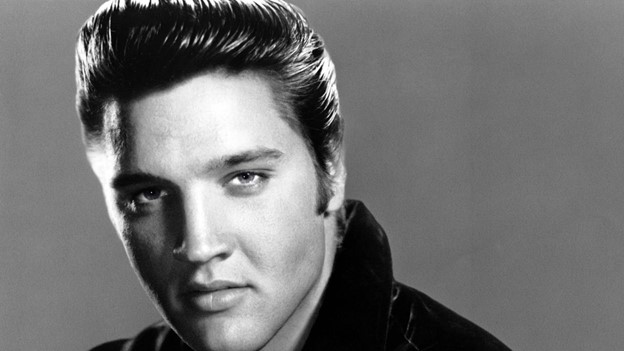
Forty-five years ago today, the King left the building for the last time.
But sadly, Elvis was not convinced of his true worth when he departed the castle we call earth.
As a boy the Monarch of Rock and Roll had given the Lord his soul, but the insecurities of his early life had robbed him of peace of mind. There was no peace in the “Valley of the Dolls.”
Blind to the seductive greed of success, Elvis Aaron Presley stumbled into the ghetto of addiction, infidelity and pride where he died a pauper (though a king).
On August 16, 1977 the home he called Graceland became “Heartbreak Hotel.”
In spite of his tragic life doing it “his way,” my hope is that the One who saw Elvis crying in the chapel as a kid loved him tender all the while taking his hand in His leading him to the Eternal Land of grace, life and peace.
I learned of his death while leading a group of senior adults on a tour of the Mendenhall Glacier in Juneau, Alaska that sad summer day in 1977.
The radio in the visitor’s center broke the sad news. And though I was not wearing blue suede shoes, I was all shook up! And all these years later, based on the music we hear on Spotify and iTunes, Elvis is always on our mind!
I bought my first Elvis album (His Hand in Mine) when I was twelve years old in 1964.
Tony Dow’s death calls to mind the speed at which time passes
Just leave it to Beaver to shed a few tears. It doesn’t surprise me. For so many years his big brother Wally was his best friend and more. But now his big brother is gone.
So long Wally Cleaver. So long Ward and June. So long Eddie Haskell. You left us too soon. Our “Leave it to Beaver-ville” won’t be the same with “The Beave” all alone by himself.
Yes, Tony Dow’s death made the news yesterday. It makes our hearts grieve when celebs pass away. Those we followed as fam’ly, we watched faithfully. No wonder it’s hard when they die.
Their deaths are reminders that we’re growing old. That each day’s a gift that’s more precious than gold. That now is the best time to tell those we love how we feel about them while we can.
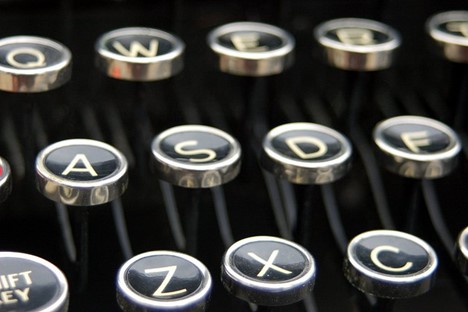
A manual typewriter keys remind us of what is not automatic
I’ve had a fascination with typewriters since I was three years old. I used to sit at my pastor-father’s manual Royal and pretend I was writing a sermon.
When I was in 8th grade, I audited a beginning typing class at the local community college. It was then I learned about the eight keys on the standard keyboard known as the “home row.”
In case you’ve forgotten, the home row of keys is comprised of ASDFJKL and the semi-colon. They are the resting position for your two hands. They’re like middle C on a piano. The home row serves as a foundation. They provide a perspective for your fingers as you type without having to look at the keyboard. Once your left hand and your right hand are oriented, you have a sense of security of where you are and where you’re headed.
With that orientation in mind, I’d like to consider those eight keys on this Independence Day weekend. Each of those letters stands for something foundational to our identity as a nation. They underscore what sets us apart. These qualities are the home row of our freedom.
A stands for allegiance. Whenever we say “the pledge,” we vow our allegiance to more than the flag. We promise loyalty to the republic for which it stands. As we watch the Ukrainians resisting the Russians to remain independent, we see allegiance modeled courageously. What we see inspires us to a greater patriotism.
S calls to mind stewardship. When we sing America the Beautiful we are reminded of what lies beneath our spacious skies from sea to shining sea. The beauty of our country is ours to maintain and keep beautiful. We are the stewards. We are the caretakers entrusted to guarantee a litter-free, carbon-free future for our descendants.
D is for democracy. My Greek ancestors introduced the concept to our planet 2500 years ago. For the last 246 years we have carried forth the concept of self-rule. A government of the people, for the people and by the people is what makes our home sweet home as sweet as it is.
F stands for faith. Although we are a nation that insists on an appropriate border between church and state, we have always been a nation that has recognized a higher power and humbled ourselves with gratitude for the undeserved blessings of the Almighty. The fabric of our union frays to the degree we disregard God’s presence and sovereignty.
J is for justice. In spite of what we promise when we place our hand over our heart and pledge allegiance to Old Glory, we have failed miserably to insure justice for all. Nonetheless, the pursuit of justice remains at the core of our corporate conscience. Equal treatment under the law is the homefield advantage our constitution guarantees.
K calls to mind kinship. America has always been a family of people made up of individual families. We’ve been called a melting pot and an ethnic gumbo. We are a quilt of diverse cultures stitched together by the thread of a common dream. But that common dream does not denigrate our unique backgrounds. Rather, it celebrates them. Kinship is at our core.
L stand for Liberty. The gigantic statue in New York Harbor and the cracked bell in the City of Brotherly Love will never let us forget that liberty is at the heart of our identity as a free people. We fight wars on our own behalf and on behalf of others to protect the right to vote, the right to worship, the right to protest and the right to succeed.
; The semi-colon reminds us of the fact that our story as a nation is still being written. According to Thomas Jefferson, the American experience is an experiment still being tested. Each Independence Day is an opportunity to reaffirm our commitment to the kind of country we desire to be as we keep our fingers on the home row.



 My Rhymes and Reasons