Learning to Say “Grüezi!”

Grüezi is the way you say hello in Swiss-German

Within a few days our twelve weeks in Switzerland will come to an end.  And once again I have been reminded how quickly time passes. As St. James informs us in his letter in the New Testament, “Life is a vapor.” Or as the Steve Miller Band puts it, “Time keeps on slippin’ into the future.”

At any rate, our time here in the land of Heidi, chocolate and watches wasn’t long enough to learn many words in Swiss German (the dialect spoken in Luzern). By their own admission, those who live here say Schweizerdeutschis quite different from high German. It’s quite difficult to master.

I was grateful that the International Church of Luzern was an English-speaking congregation. But Wendy and I did learn how to say hello in Swiss German. When we arrived at our apartment in the middle of March, we were greeted by a white sign with red letters on a shelf in the entry way. Attempting to sound out grüezi, I asked how to say this seemingly unpronounceable word. I also asked what it meant.

“It’s pronounced GRIT-see,” the chair of the pastoral search committee explained. “It’s how we greet one another. And it’s not all that difficult to say.”

Almost immediately Wendy and I began saying grüezi as we’d meet people in the store and on the street. To our delight strangers greeted us with grüezi in return. We said grüezi often as we took time to visit in the homes of our Swiss congregation. We’d say grüezi as we took day trips on the lake or to the mountains with the members. We’d say grüezi as we’d study the Bible together in small groups.

Learning to say hello to this church family has been deeply rewarding. As the interim minister I was able to give myself fully to loving the flock without being burdened with the demands normally associated with a full-time call. It’s the kind of assignment I’ve come to appreciate.

I’ve served in the role of interim pastor twice in my forty-five years in ministry. Both situations were most fulfilling. In each case, I was tasked with the challenge of holding the congregation together while they anticipated their next fulltime shepherd.

But one of the hard parts of being an interim pastor is making new friendships and investing in relationships only to have to say goodbye a short time later. If you’re wired the way I am, you don’t hold people at arm’s length in order to avoid the pain that goes with farewells. Pastors like me can’t help drawing close to those around you and making memories together. It’s just what we do.  But then comes the grief. Or as Shakespeare put it, “Parting is such sweet sorrow.”

I first learned the emotional letdown of saying goodbye to new friends while working my way through seminary. My summer job for three years found me escorting tour groups to Alaska and through the Canadian Rockies. Over a two-week period, I’d get to know my passengers in a very personal way. In a relatively short period of time, we’d share family history and hopes for our future while experiencing memorable moments together that will last a lifetime.

And then I would be forced to say goodbye to new friends. I went into a bit of a depression.  The grief was real. The sadness was palatable. But in retrospect, I would call it good grief. I was grieving because I had experienced genuine joy and meaningful friendship before having to say goodbye.

As I come to the end of this Swiss ministry adventure, I’m once again experiencing good grief. The pain is real but so are the connections that Wendy and I have made. Friendships have been born that will be lasting. Relationships have been established that were mutually beneficial. Learning how to say hi in the language of the locals came with a windfall in spite of the tears. But I’m not sorry for the sorrow.

It’s inevitable. Hellos always give way to goodbyes. The present eventually becomes the past. The door of opportunity swings open and shut. But in it all, learning to say grüezi (in any language) is the key that unlocks the doors God places in our path.

It’s Easter Sunday, Again!

The Wounded Lion Monument is one of the most popular attractions in Lucerne, Switzerland

This weekend Orthodox Christians around the world are celebrating the resurrection of Jesus. Because the Orthodox Church bases its observance of Easter on the ancient Julian calendar (in contrast to the Gregorian calendar followed by Western Christians), the most holy day of Christendom is celebrated on different days. Typically, the two Easters are a week apart. This year there is more than a month separating the two observances.

As a Protestant pastor with Greek ancestral roots, I have historically celebrated both the traditional Easter with my congregations and the Orthodox Easter with my family. When I was a young boy, my dad taught me the Greek Easter greeting.  And to this day our family greets one another with “Christos anesti! Alithos anesti!”

This year finds me celebrating both Western and Orthodox Easter in Lucerne, Switzerland. And for both occasions there is the perfect spot in town at which to sit and contemplate the cornerstone of the Christian faith.

If you have ever visited Lucerne, you likely have stopped at the Wounded Lion Monument. This amazing rock sculpture, designed by famed Danish artist Bertel Thorvaldsen, commemorates the 760 members of the Swiss Guard who lost their lives protecting the King of France during the French Revolution in 1792. The monumental effort to carve the gigantic lion in the side of a sandstone cliff began in 1819 and was completed two years later.  

The lion, who measures 20 feet high and is 33 feet long, lies with a broken spear in his back and his head bowed. He is obviously dying. Mark Twain called it “the most moving and mournful piece of stone in the world.”

I first saw the Lucerne Lion in-person six weeks ago while approaching Holy Week. As I stared at the beautiful (yet haunting) work of art, I couldn’t help but think of the Christ-like figure in the first of C. S. Lewis’ Chronicles of Narnia.

In “The Lion, the Witch and the Wardrobe,” the first of Lewis’ chronicles, Aslan the lion willingly lays down his life to lift the curse that has held the Kingdom of Narnia captive. The lion’s lifeless body lies cold and still on a giant stone table.

Using his palette of language, C. S. Lewis paints an unforgettable picture that conjures up the events of Good Friday. This gifted wordsmith conveys the suffering that provides the backdrop for the glorious message of the resurrection.

In his book as the symbolic story unfolds, Lewis pictures Easter Sunday as well. The stone table is discovered by the children without any sign of Aslan. They soon encounter the lion fully alive. Aslan has returned from the dead. The children also realize that Narnia has returned to its original glory.

The land that had been labeled “as always winter but never Christmas” was once again blooming in springtime glory. The visible and invisible evidence of Immanuel (God-with-us) provided Narnia with proof of a redeemed kingdom.

Although I have long believed that the truth of Easter is an ongoing reality and not simply a single day on the liturgical calendar, this year it is all the more in focus. With the two Easter observances of the Christian Church being more than a month apart, there is cause to contemplate the fact the resurrection can be celebrated continuously.

If you’re like me, hardly a week goes by without learning of someone you know (or know of) who has passed away. Death dominates the landscape of our lives. The shadow of sorrow creeps across our hopes and dreams. Grief is an ever-present reality. Parents die. Spouses receive a terminal diagnosis. Siblings leave us prematurely. Even our children are not exempt.

And given the grim reality of the Grim Reaper’s unsolicited visits to our families, knowing that death has been defeated once and for all is something I can’t celebrate enough. Having two Easters is just fine. In fact, I would welcome even a few more. Christ is risen! He is risen indeed!

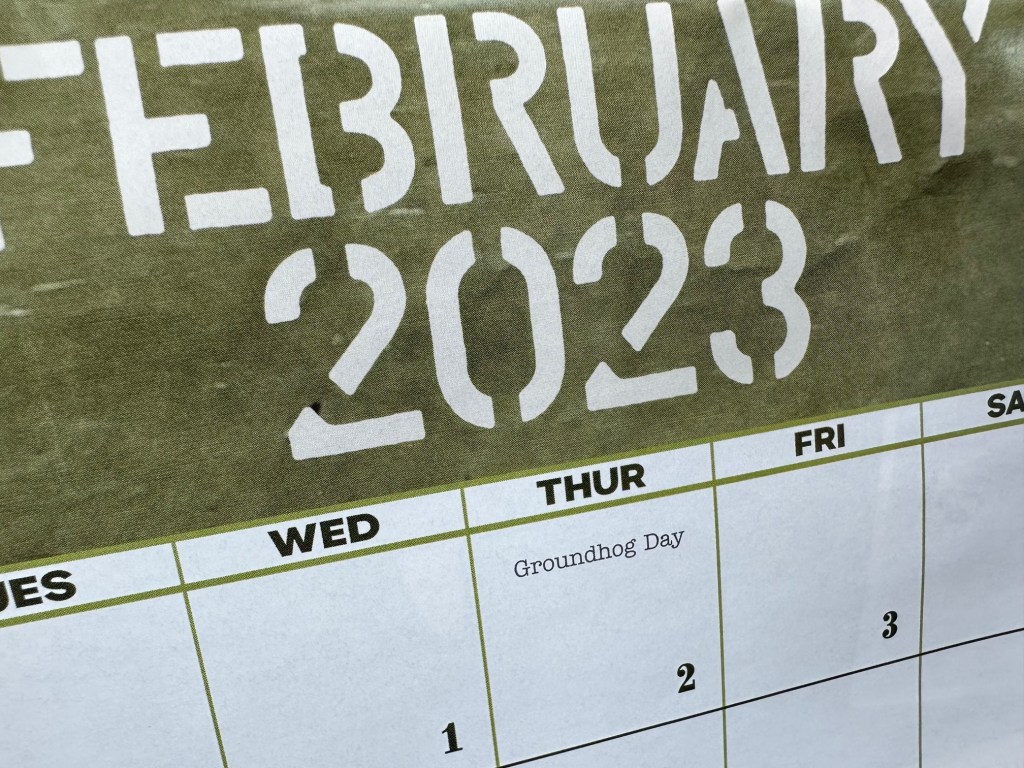
Reflections on Groundhog Day

A day in honor of rodents offers spiritual lessons

February is a month of special days. It’s Black History Month. It’s midwinter break month to get away for some skiing or sunshine. The midpoint of this 28-day month is Valentine’s Day followed by Presidents Day. And, of course, it all kicks off with Groundhog Day.

I’ve never been to Gobbler’s Knob in Punxsutawney, Pennsylvania on February 2nd, but I’m intrigued by the annual tradition that has put that small town on the map. The yearly pursuit of Punxsutawney Phil searching for his shadow has earned that cave-dwelling rodent celebrity status.

Thirty years ago Groundhog Day, starring Bill Murray and Andie McDowell, earned a place in popular culture. Ever since its release, just the mention of Groundhog Day calls to mind the plight of being trapped in a 24-hour time loop.

Although the plot of that 1993 film is far-fetched, for those who have jobs that offer little variety or change of pace, life can seem like a perpetual Groundhog Day. But it’s not just those who deal with repetitive job functions who feel their life journey is lived in cruise-control.

If we are honest with ourselves, our day-in-and-day-out routines and rituals can render our daily lives devoid of a sense of adventure and creativity. While many find comfort in facing the familiar, most dream of doing something different.

This Groundhog Day, instead of being preoccupied with looking for shadows, why not focus on looking in the mirror? What do you like? What do you wish you could change? What will it take to bring about the change you desire? Chances are it will require rebooting one’s routine.

I can’t remember where I first heard it, but I’ve never forgotten it. Insanity is doing the same thing over and over again and expecting different results.

It’s true! And yet we are guilty of acting insane a lot of the time. We fall into mindless behavior patterns without thinking about the consequences for others or to ourselves.

But looking into the mirror instead of looking for shadows is only the first step. Once you take a good hard look at what you see, you will need to decide what to do with what seems out of place. It will require acting on what you’ve discovered.

There’s a memorable verse in the New Testament that underscores the importance of following through on what we understand needs to change. The Epistle of James chides the first-century faithful to not simply give mental assent to something they claim to believe, but to actually put feet to their faith.

“Do not merely listen to the word, and so deceive yourselves. Do what it says. Anyone who listens to the word but does not do what it says is like someone who looks at his face in a mirror and, after looking at himself, goes away and immediately forgets what he looks like.” (James 1:22-24)

A month into this new year, some resolutions have already been coded and carried to the morgue. But it’s not too late to establish some new action steps to make the most out of 2023.

We still have time to breathe new life into our diets, revisit our fitness routine, revive our spiritual disciplines, alter our schedule with family, renew our volunteer commitments and establish sacred times to take care of ourselves.

Speaking of shadows, there is one shadow I would suggest looking for and attempting to follow. As a person of the cloth, throughout my life I’ve attempted to take my cues from a first century rabbi who began his career as a carpenter.

Jesus of Nazareth offers me a great example of one who cared for others and himself while refusing to be defined by inflexible routines. Maybe following his shadow would be a worthy pursuit for you as well. Not just on Groundhog Day, but every day.

70 Lessons

What I’ve learned in seventy years of living

This past weekend was not only Easter Sunday filled with a weekend of meaningful commitments, it included a milestone birthday. In addition to starting my tenth year as chaplain at Covenant Living at the Shores, I began my eighth decade of life.

In the midst of a busy weekend I found an hour to reflect on lessons I’ve learned in seventy years of living. Some are quite obvious. Others are deeply personal. Some are borrowed from people I respect. All of them provide a peek into what I value.

1. George Bailey isn’t the only one who’s had a wonderful life.
2. Years go by faster the older you live.
3. Parents know more than we give them credit for.
4. Everybody has a story worth sharing.
5. Asking questions is the key that unlocks a person’s story.
6. The Creator desires a personal relationship with us.
7. Jesus is the means by which that relationship is made possible.
8. Change is hard.
9. Change is inevitable.
10. Beauty can be found everywhere.
11. Work that you love isn’t work.
12 Worry empties today of its strength.
13. Today is a gift.
14. Gifts are meant to be unwrapped and enjoyed.
15. Memories are a lasting treasure no one can steal.
16. Debt is a heartless seducer.
17. Living life in 24-hour capsules brings time-released joy.
18. Sunsets and ice cream make for cheap dates.
19. Stick trees silhouetted against a sunrise redeems winter blahs.
20. Working out helps our bodies work better.
21. Physically fit people die healthier.
22. Adversity makes us strong.
23. Love is a universal language.
24. Every memorial service we attend in one closer to our own.
25. Music is oxygen for the soul.
26. Children are a gift from the Lord.
27. Adult children keep you talking to God.
28. Grandchildren provides the joys of parenting without the responsibilities.
29. Poetry that rhymes is easier to understand.
30. Walking in the woods allows you to walk with God.
31. Pets provide a picture of God’s unconditional love.
32. The death of a pet is equivalent to losing a member of your family.
33. Grief is the price you pay for really loving someone.
34. Christmas doesn’t mean a thing without Easter.
35. Easter is not possible without Good Friday.
36. Eating humble pie requires swallowing pride.
37. It’s more blessed to give than to receive.
38. Receiving is harder than giving.
39. Bad things happen to good people.
40. Good things happen to bad people.
41. You can never tell someone you love them too often.
42. A shared joy is a doubled joy.
43. A shared sorrow is half a sorrow.
44. Spending time with older relatives is a priceless gift to them (and you).
45. Memorizing Scripture pays dividends now and later.
46. Taking the initiative to restore relationships takes courage.
47. Handwritten letters and notes are more valuable than e-mails and texts.
48. Mementoes on a desk or a shelf recall moments we dare never forget.
49. Forgetting God’s faithfulness is the most common kind of memory loss.
50. Those with the most money often have the most worries.
51. We begin our lives and end our lives wearing diapers and sleeping most the time.
52. Family traditions sustain values and perpetuate memories.
53. There is nothing more sad than watching alienated siblings at a parent’s funeral.
54. Learning the love language of your mate does not require a degree in linguistics.
55. When you get married, you marry a family as well as your mate.
56. You tend to sleep better with a window cracked open.
57. Making small talk with strangers can lead to big opportunities.
58. Shopping at a thrift store is like going to a museum.
59. Furnishing your home or wardrobe at a thrift store saves you money and benefits others.
60. Beginning your day with coffee and prayer makes you alert to life and the Lord.
61. Taking time to visit a relative’s grave gives cause to pause and reflect on the brevity of life.
62.  Taking pictures with a smartphone is an inexpensive way to express one’s creativity.
63. The church is a community of people not a building or a certain denomination.
64. There’s nothing like a pandemic to unmask what really matters in life.
65. When you lose your job unexpectedly you discover flavors of grace you didn’t know existed.
66. Unbelievable offers generally are.
67. Gratitude is the prelude to worship.
68. Mulligans aren’t just for golf.
69.  It’s easier to ask forgiveness than to ask permission.
70. Birthdays are a necessary rest stop on the interstate of life.

Remember to Say Thanks!

It’s easy to forget to express gratitude

“Remember to say thanks,” Mom said.
It’s easy to forget.
‘Cause gratitude does not come naturally.
Those magic words we learned as kids
acknowledge we’ve been blessed.
So let’s say thank you each and every day.

Remember to say thanks because
it’s easy to be still
and never let someone know how we feel.
That special thing they did or said
reminding us they care,
deserves acknowledgment. It’s a big deal!

Remember to say thanks for when
we do so we extend
an honor to the one who honored us.
And while it takes some effort
to be grateful, it’s a key
that unlocks a growing friendship. It’s a must!

_______

Greg has a related newspaper article, “Talking turkey about … turkeys” published on 11/21/2021 in The Wenatchee World.

Free subscription to e-mail notifications for each new post by Greg on this site: